Persistent Stiffness and Headaches After a Car Accident: How to Manage Post-Accident Symptoms
Experiencing persistent neck stiffness or headaches after a car accident? Learn why these symptoms occur and how Baha Korean Medicine Clinic near Daechi Station manages post-accident aftereffects.
Hello, I am Shin Jong-hoon, director of the clinic.
Right after an accident, many people feel they were not seriously injured and continue with their daily routines as normal. However, as time passes, symptoms such as heaviness in the neck and shoulders, stiffness in the lower back, headaches, and dizziness may begin to appear.
Symptoms that develop after a car accident can vary not only according to the severity of the impact at the time of the accident, but also depending on each person's body structure, habitual posture, and the degree of muscle tension they carry.
Today, at Baha Korean Medicine Clinic near Daechi Station, we would like to discuss why stiffness and headaches commonly seen after a car accident can persist, and what aspects need to be considered when managing post-accident aftereffects.
During a car accident, the sudden change in vehicle speed transmits inertial forces—caused by acceleration and deceleration—to the occupants' bodies. In particular, in rear-end or head-on collisions, the torso and head move at different speeds and in different directions, which can cause the neck to be thrown rapidly back and forth in what is known as an acceleration-deceleration cervical movement.
Because the neck connects the head to the torso, this kind of sudden movement can place considerable strain on the muscles, ligaments, joints, and surrounding soft tissues of the cervical spine. Depending on the direction and force of the impact, muscle tension and changes in movement can extend beyond the neck to the shoulders, upper back, and lower back as well.
Many people who complain of headaches after a car accident also describe stiffness in the neck and shoulders alongside the head pain. Various muscles that support and move the head are located around the neck. If tension develops in this area due to an accident, moving the neck can become more uncomfortable than usual, and as tension in the neck and shoulder region persists, discomfort can radiate toward the head.
In particular, if you repeatedly experience a heavy sensation at the back of the head or a pulling sensation at the temples along with neck stiffness after an accident, it is advisable to assess the condition of the neck and shoulders together. If difficulty sleeping or frequent waking due to pain is added to this, increasing fatigue can make the headaches feel even more uncomfortable.
At Baha Korean Medicine Clinic near Daechi Station, we do not approach post-accident stiffness and headaches by simply treating only the area where pain is present.
We begin by reviewing the details of the impact at the time of the accident, the timing of symptom onset, and the range of motion and muscle tension in the neck, shoulders, and lower back, in order to understand what changes have occurred in the body since the accident.
Treatment approaches are then tailored to the patient's current condition.
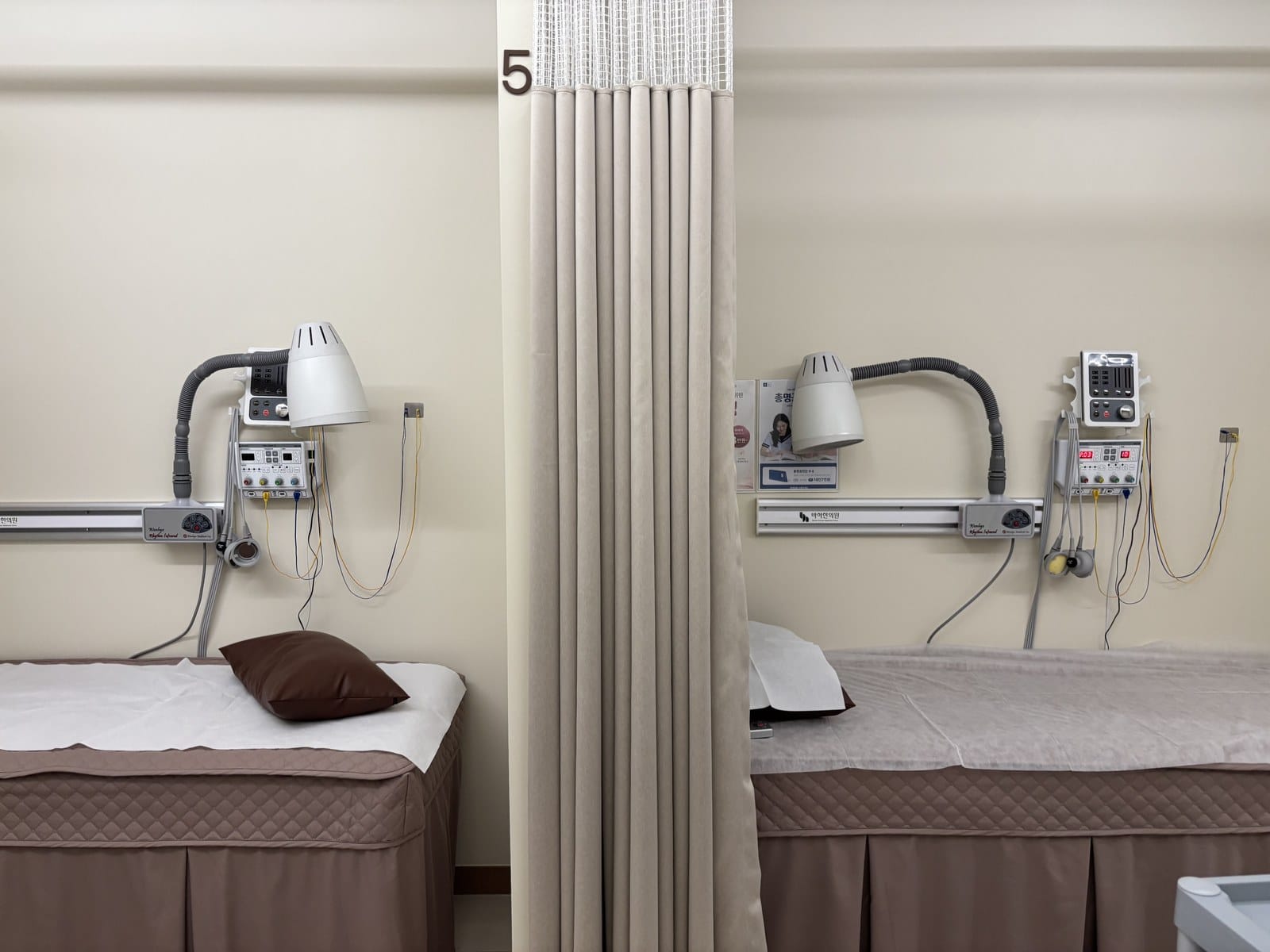
① Acupuncture and Cupping Therapy
This helps gently relax the tense muscles around the neck and shoulders following the accident, and assists in managing stiffness and pain.
② Chuna Manual Therapy
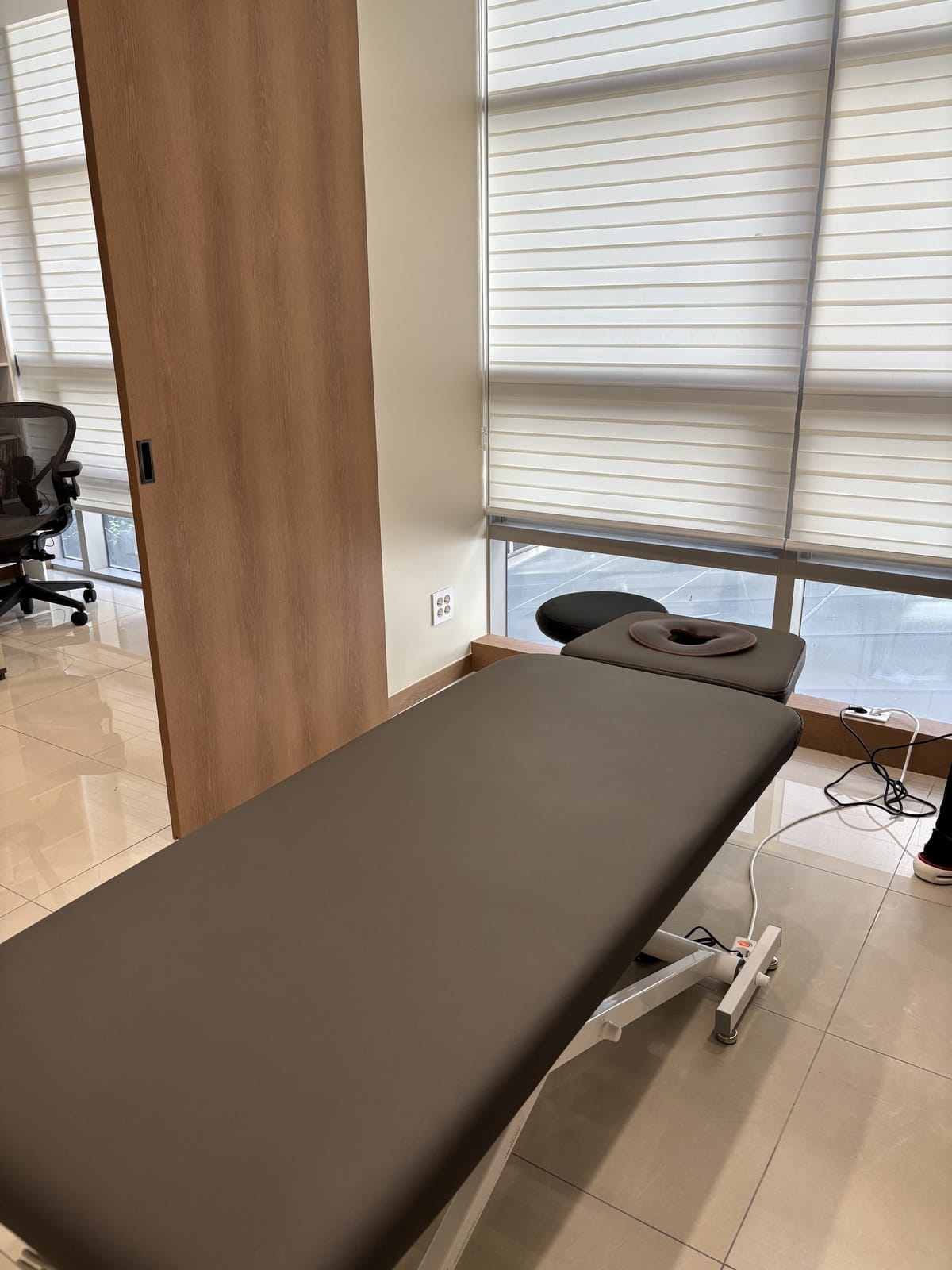
When range of motion in the neck or lower back is restricted, or when there is an imbalance in the movement of the spine and pelvis, the Korean medicine doctor directly assesses the condition and applies manual therapy to the areas that require it.
Managing Post-Accident Aftereffects in Daily Life
For post-accident aftereffects, it is important not only to receive treatment but also to reduce unnecessary physical strain in daily life following the accident.
① Avoid Strenuous Exercise and Stretching
Engaging in intense exercise or excessive stretching while pain remains can actually place additional burden on the body. In particular, forcefully rotating the neck or repeatedly bending the lower back should be adjusted with your current physical condition in mind.
② Avoid Staying in the Same Position for Long Periods
If you use a computer or smartphone for extended periods, rather than maintaining a single posture continuously, it is better to change positions and move lightly at regular intervals.
③ Create a Comfortable Sleep Environment
If the quality of your sleep has declined due to post-accident pain, it is worth checking whether your pillow height or sleeping position is placing strain on your body in its current state. Most importantly, rather than applying the same lifestyle guidelines to everyone, adjustments should be made to suit each person's current symptoms and physical condition.
If you initially thought the stiffness in your neck and lower back after a car accident was minor, but it has not improved over time or has even worsened, it is advisable to have your current condition assessed. In particular, if headaches recur alongside neck and shoulder pain, or if symptoms that were not present before the accident—such as dizziness, nausea, numbness or weakness in the arms or legs—appear, it is important to seek a thorough examination at a medical institution if necessary.
Post-accident aftereffects are not limited to symptoms that appear immediately after the accident. Even if you felt fine at first, new discomfort can emerge as time goes on, so it is necessary to continuously monitor changes in your body after the accident.
At Baha Korean Medicine Clinic near Daechi Station, rather than viewing post-accident stiffness and headaches as pain in a single area, we comprehensively assess the circumstances of the accident, your current symptoms, muscle tension, and joint mobility to identify the Korean medicine management approach best suited to each individual.
If your neck and shoulders remain persistently stiff, your head feels heavy, or headaches keep recurring days after the accident, rather than simply waiting for time to pass, please have your current condition checked.
During the recovery process after an accident, it is important not to overexert yourself, to get adequate rest, and to carefully observe changes in your symptoms. If pain persists or is interfering with your daily life, please visit us so that an appropriate treatment and management plan suited to your current condition can be established.